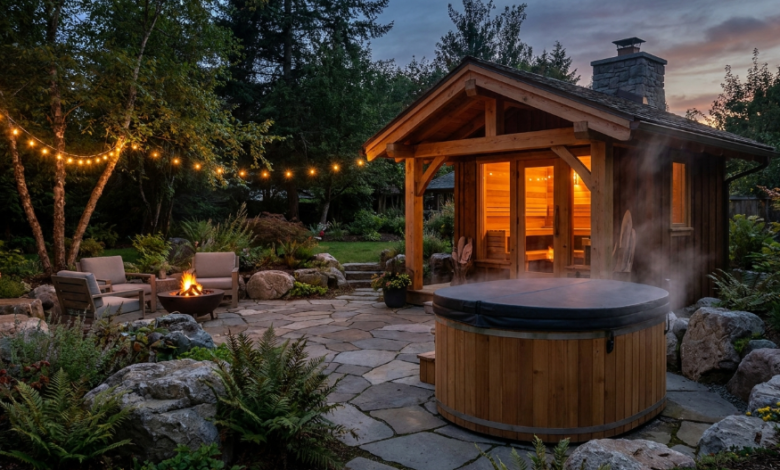
A sauna needs a fresh-air intake placed low on the wall near the heater and a separate exhaust vent set high on the opposite wall, positioned so the room’s air turns over roughly every twenty to thirty minutes of active use. Skip that exchange and oxygen gets stuffy, humidity stalls in one corner instead of spreading evenly, and the wood behind the bench stays damp long after the last person leaves. Most factory-built cabins ship with vent openings already sized to the heater, but where those openings actually sit still has to match how the room gets used, not just what the panel diagram shows on paper.
What Does Good Ventilation Actually Do Inside a Sauna?
A sauna is a sealed box heated well past normal room temperature, and without planned airflow it would slowly run out of breathable air and trap moisture against every wood surface. Proper ventilation does three jobs at once: it replaces oxygen as it gets used up, it carries steam and humidity out instead of letting it collect in one spot, and it keeps the wood drying between sessions instead of staying damp around the clock. A cabin with vents sized and placed correctly holds a steadier temperature too, since fresh air constantly feeds the space around the heater rather than leaving pockets of stale, cooler air near the floor.
Where Should the Intake Vent Sit?
The intake typically sits low on the wall, close to or directly below the heater, usually four to six inches across on a residential unit. Placing it near the heater matters because the incoming air gets pulled across the hot rocks and warmed before it circulates through the room, instead of blowing cold air straight at anyone sitting on the lower bench. On a barrel sauna the intake is often built into the door or the panel closest to the heater base, while cabin-style units usually cut it into the wall a few inches off the floor. A vent set too far from the heater, or too close to a bench where someone sits directly in the draft, undercuts the whole point of positioning it thoughtfully.


Where Should the Exhaust Vent Sit?
The exhaust goes on the opposite wall or in the corner farthest from the intake, usually twelve to eighteen inches below the ceiling rather than at the very top. Setting it a bit below the ceiling, instead of right at the peak, keeps the hottest layer of air from escaping the instant it forms, which would make the heater chase a temperature it can never quite hold. Diagonal placement, intake low on one wall and exhaust high on the far wall, forces air to travel across the whole room instead of short-circuiting between two vents sitting close together.
Does a Damper Make a Real Difference?
An adjustable damper on the exhaust lets a household tune airflow for the kind of session they want, and it is one of the few upgrades worth paying for on a build-it-yourself kit. Closing it partway during a steam-heavy session traps more humidity and heat, which is what people chasing intense löyly usually want. Opening it wider on a quick, dry session speeds up air exchange and keeps the room from feeling heavy. Shoppers comparing pre-built cabins can check how the intake and exhaust are sized before ordering, since SweatDecks’ lineup and most established makers list vent dimensions on the product page, and that detail cannot be changed once the wall panels are built and shipped.
How Does Humidity Change the Airflow Math?
A dry traditional session and a steam-heavy one put very different demands on the same two vents. Pouring water over the rocks spikes humidity fast, and without steady air exchange that moisture has nowhere to go except into the wood grain on the walls and ceiling. Rooms that see frequent steam sessions benefit from slightly larger or more frequently opened vents than a cabin used mostly for dry heat, and it is one more reason panel joinery and wood species matter alongside vent sizing, since tight, well-fitted boards hold up better against repeated moisture exposure than gappy construction with poor airflow behind it.
What Are the Warning Signs Airflow Is Off?
A musty smell after the room cools, visible condensation dripping down a wall instead of drying between sessions, or a heater that runs constantly without ever quite reaching its set temperature are the three most common signs something is wrong. Graying or darkening wood clustered right around a vent opening usually means that vent has been partially blocked, often by towels, robes, or storage items left too close to the wall. None of these problems require tearing the cabin apart to fix; most trace back to a blocked vent, a damper left in the wrong position, or an exhaust placed too close to the intake to create real cross-room movement.
Why Airflow Matters for the Wellness Case Researchers Describe
Reviews of regular sauna use, including a widely cited summary in Mayo Clinic Proceedings, associate consistent sessions with favorable cardiovascular and vascular measures, and a separate physiology review on heat and cold exposure lays out how the body handles sustained high-temperature environments. That research assumes a room that can actually be used comfortably and repeatedly, which is harder in a cabin with stagnant air and a heater struggling against poor circulation. None of the studies claim ventilation itself drives the associations they report, but a room people actually want to sit in more than once a week is a basic precondition for any of it to apply.
Frequently Asked Questions
How many vents does a sauna actually need? Most home cabins need two: an intake low near the heater and an exhaust higher on the opposite wall. A few larger multi-bench rooms add a second exhaust so the far corner does not stall out.
Can you cover a sauna vent with a towel? No. Blocking either vent stops the exchange the room depends on and lets humidity and carbon dioxide build up. Adjust a damper instead if a draft feels uncomfortable.
Does a home sauna need a mechanical fan? Almost never for a standard two- to six-person cabin, since properly placed vents create enough natural draft. Larger commercial rooms or long duct runs are the exception.
How often should the air fully exchange? A well-vented cabin should turn its air over roughly every twenty to thirty minutes of active use, enough to stay comfortable without pulling out more heat than the heater can replace.
References
- Cardiovascular and Other Health Benefits of Sauna Bathing: A Review of the Evidence, Mayo Clinic Proceedings, 2018.
- Effects of heat and cold on health, with special reference to Finnish sauna bathing, American Journal of Physiology – Regulatory, Integrative and Comparative Physiology, 2018.
- Clinical Effects of Regular Dry Sauna Bathing: A Systematic Review, Evidence-Based Complementary and Alternative Medicine, 2018.